Holding Classes
I then began to host the one-to-one online lessons to an animation student who could help me provide feedback on what was useful, what I could add when teaching, what was confusing, and what I should remove. While ideally, I wanted this to take place at set times, weekly ones over a few weeks, like a term, I had to adapt to both of our schedules so I could get the feedback I needed in time as well as be able to work on my other project.
So, this is not strictly week by week, but more like whenever either had spare time to spend learning the concepts, with enough time to have a feedback and improvement session after the class for any suggestions that could be gone through and implemented.
Lesson Documentation
Lesson 1
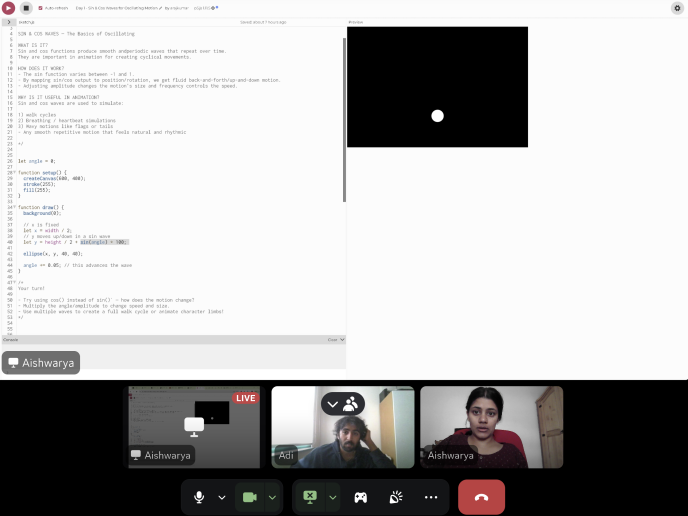
The first lesson happened quite later on as I had changed my idea and my codes quite a bit. This was quite daunting, but good to have a familiar face to give me feedback on my skills, and it ended up being pretty fun in the end, where we could exchange feedback, I could add code comments, etc. It went on for a while as I was mainly gathering feedback more than being a teacher.
Lesson 2
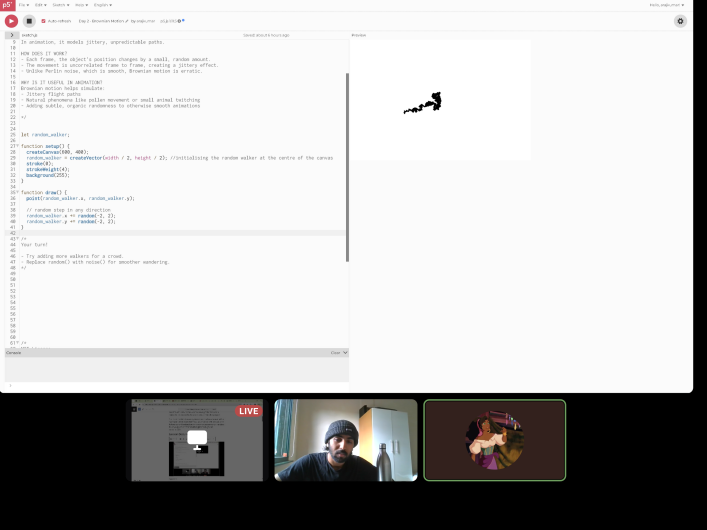
The second lesson happened the very next day, as I had to work with both our schedules if I wanted feedback to improve, rather than conduct it like a workshop. I had gotten a bit more familiar and confident here. Here, I gave them some homework, as I wanted the student repo to have some student work.
Lesson 3
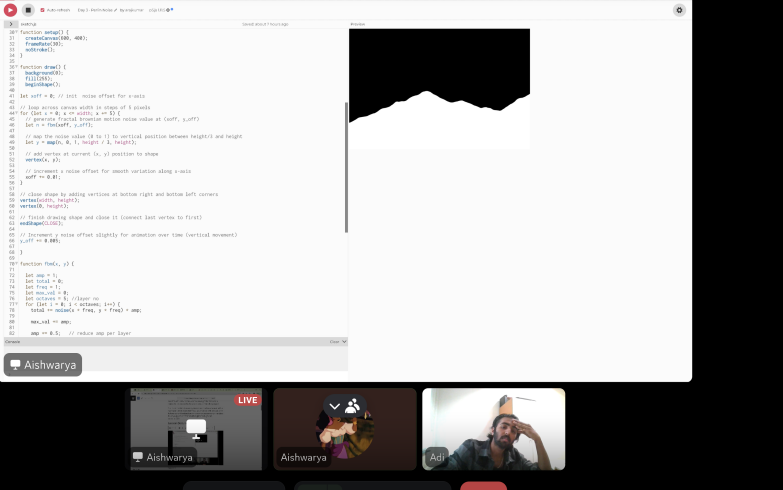
Third lesson happened much later than the second by which time they had forgotten all the previous material. I made a note in the future improvements section of the documentation to ensure a knowledge check at the start of each lesson about the prior lesson as a quick recap. I was not going to implement these in this shorter time frame, but later on in the coming months.
Lesson 4
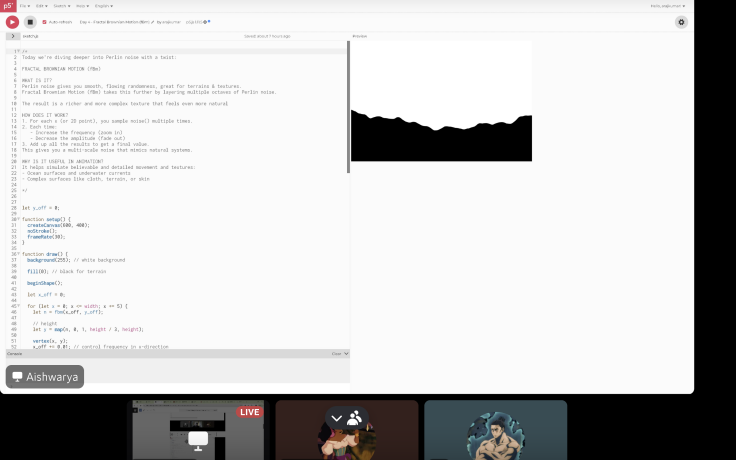
The fourth and fifth lessons took place in the few days between the graduation project submission and this submission, during a particularly busy period for both the students and myself. However, I was able to gather significantly more feedback during these sessions, as I had no other major projects at the time. I saved much of this feedback for the blog, especially suggestions that required more time to implement—such as changes to the site’s aesthetics. On a positive note, the students managed to create some pieces for the student work repository, which was encouraging and a step forward in engagement. I kept those improvements noted in this blog for the future.
Lesson 5
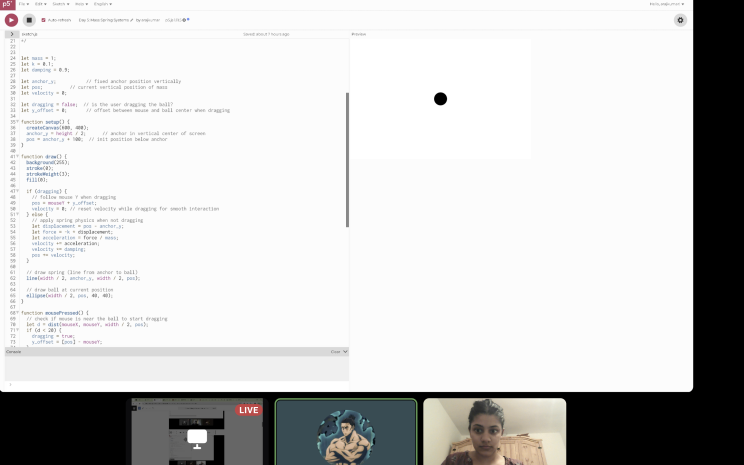
In the final lesson, I was able to sit with both students throughout the session—for the lesson itself, a feedback discussion for my blog, and while creating the homework piece together. This session was particularly valuable, as it was during this time that I began actively implementing the student work repository and figuring out how it would function moving forward.
Implementing Feedback
After each lesson, I spent some time improving the lessons from the feedback session I held after each lesson. These were, namely and broadly covering all lessons:
Adding Comments
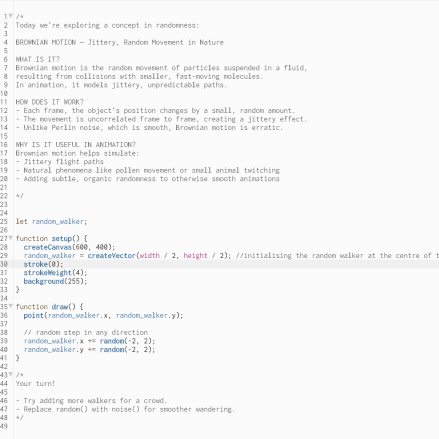
I realised that adding comments to almost every line of code is crucial, especially for students who don’t have prior experience. It is wrong to assume anyone would automatically understand things like mouse interactions or even how to set up the canvas. Initially, I jumped straight into the class material to focus on conveying the physics principles behind animation effectively.
However, I had to constantly remind about the fundamentals — like the coordinate system and basic p5.js concepts. I ensured that I did this for the following lessons, mostly where relevant to the topic. It is also helpful when they refer back to that sketch to inform their work – to know what exactly does what.
Sharing + Making Curriculum Accessible
Although I shared lesson links (such as p5.js editor URLs) afterwards, I was told this approach was inadequate. Instead, it would be much better to have a dedicated site or a GitHub page to hold all lessons together in one place, making it easier for students to access and follow the material consistently, and refer back when they wanted to.
There was some discussion initially because I didn’t initially want to reveal the lesson plan before the lesson was held. However, afterwards I realised it was actually useful for the students to go through the material beforehand to be fully prepared.
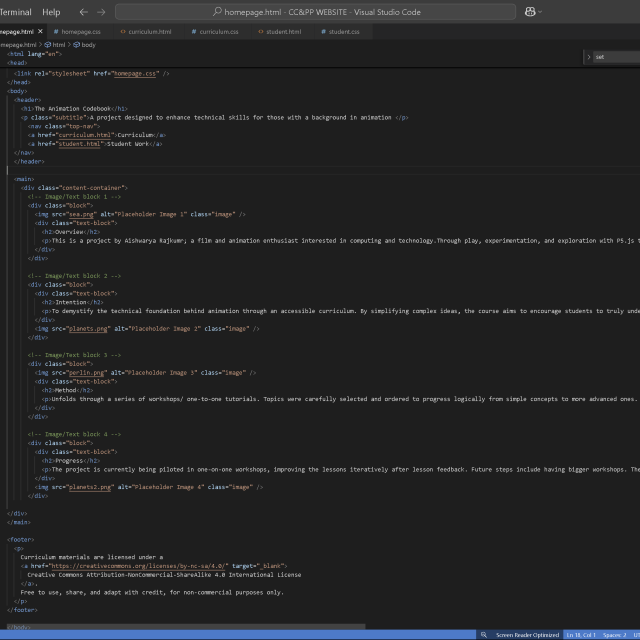
Also, having one central place to access all the lesson materials was important. So, I created a shared Notion workspace and informed them that there would soon be a publicly hosted website where all lessons would be readily and easily accessible, which was currently in the process of being made.
Class Responses + Takeaways + Homework
I originally did not have any class responses that I wanted as homework. After feedback, I realised that they found it quite fun and interesting, and wanted to research from both my class material and online and make their own work based on my code, and have somewhere to add that.
In my lesson plan I only had a ‘tips for experimentation’ section, which was more of personal prompts where I could show what the code was practically doing by tweaking different values, and I thought I could take this further by asking the student to do this instead.
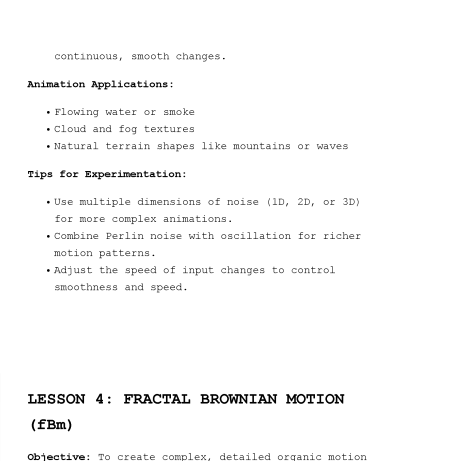
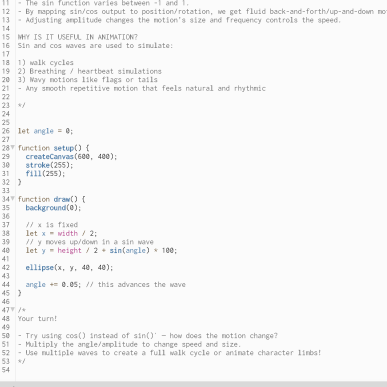
I started by adding a small ‘Your Turn!’ section as a comment block under each P5.js lesson, not to tell students exactly what to do but prompt them to create class responses with a little nudge.
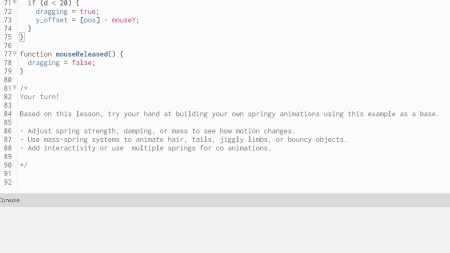
I then began creating a public repository where they could add any class responses, with instructions that I thought were understandable for someone with little GitHub experience.
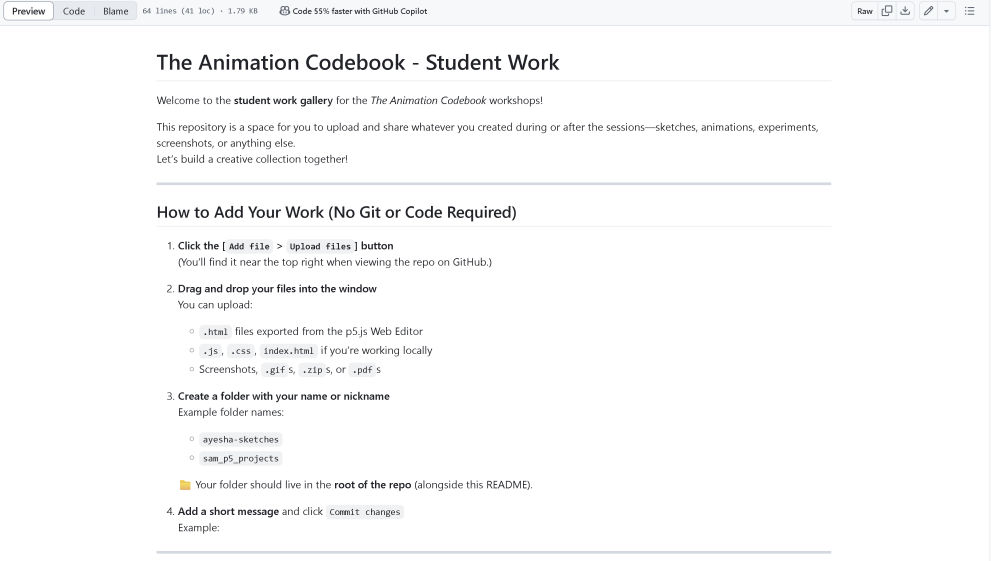
I wasn’t entirely clear on how to structure the student work repository, so I explored similar repositories for inspiration—like thinkswell/javascript-mini-projects—which helped me better understand the structure and presentation I wanted. Based on that, I created some instructions which would allow for the building of a similar repository for my project.
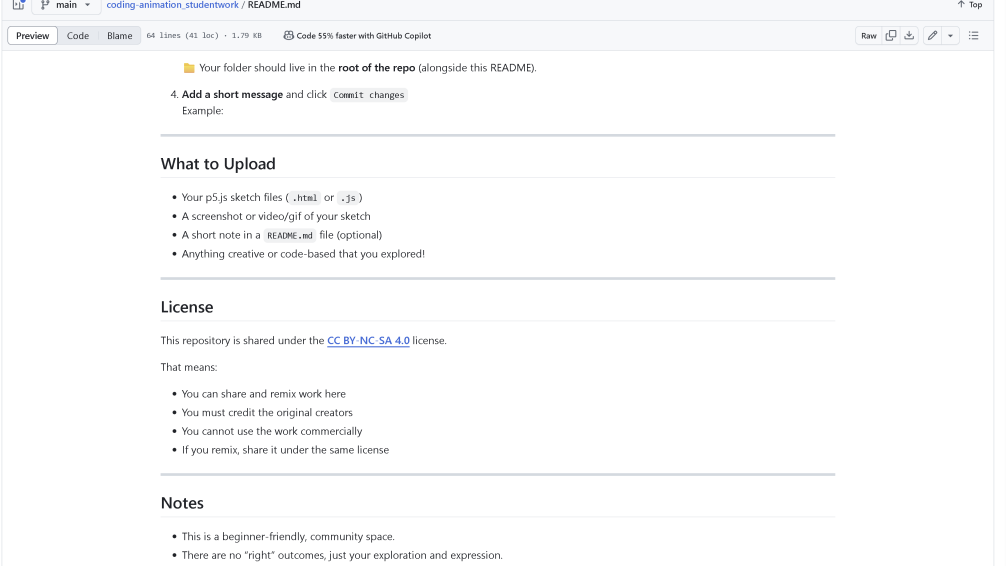
In the ‘What to Upload’ section, I kept it fairly open, as I did not want anyone who didn’t have anything particularly ‘impressive’, unfinished or was unable to understand how to use the GitHub to be discouraged, like I initially was.
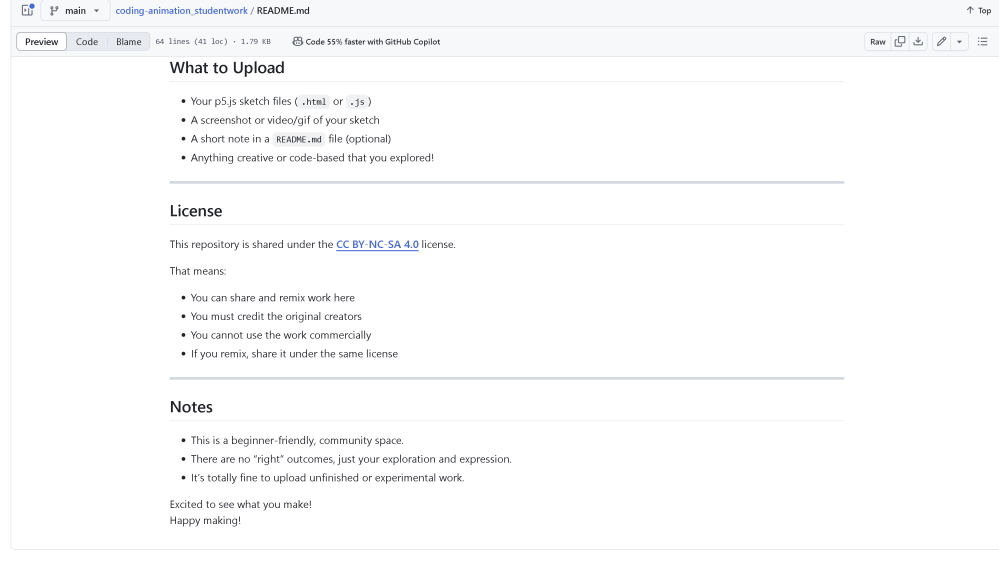
In the final day of lessons, I asked the student to upload the work they had done after the lesson, some of which we worked on together just for guidance in the initial stages. This meant they had to open a GitHub account and initiate a pull request. I realised that my instructions here were quite unclear, and changed them accordingly.
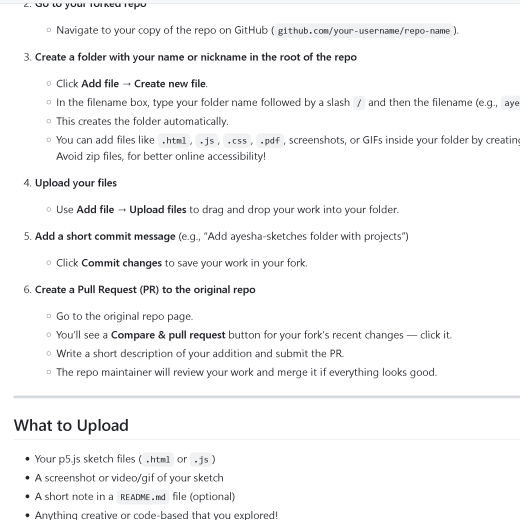
When uploading work, there were some confusions:
- Student uploaded files without naming them with their name, so the files had no clear owner.
- Uploading ZIP files directly made the repo hard to navigate because the code inside couldn’t be viewed easily on GitHub.
- Not having a folder for student uploads so everything did not have a proper sorting,
- This resulted in a cluttered repo with unclear file ownership.
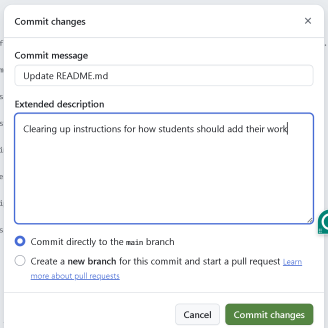
To fix this, I got on call to clear up what was confusing so we could work through and improve this repository and my presentation of it step-by-step live, so it is as accessible as possible, and to ensure I did not miss anything. After reviewing, I merged their PRs, keeping the repository organised and clear.
These are the things I did:
- Deleted original unclear uploads that were in zip format. Asked student to ensure they were unzipped, and that what they uploaded would have their name in it.
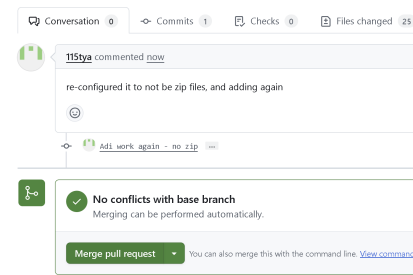
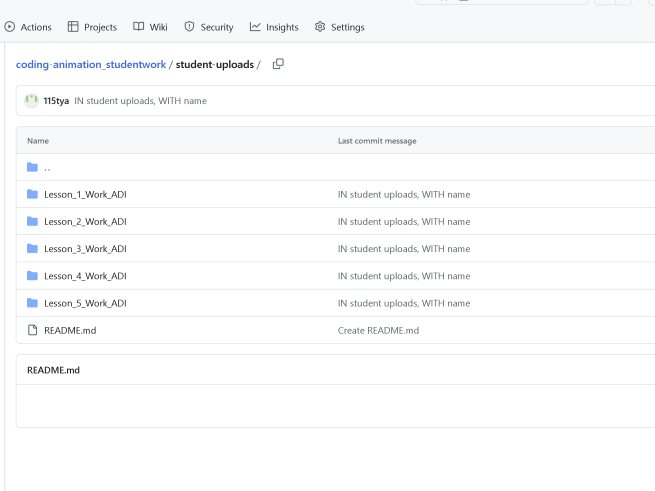
2) Realized it would be better to create a dedicated folder for all student submissions. Created a folder named student-uploads at the root of the repo. Asked student to upload their work inside that student-uploads folder, in a subfolder named after themselves (e.g., student-uploads/aditya). Requested student to re-upload their work into that folder and then re-initiate a Pull Request.
Lengthening Curriculum
After the five lessons were over, I was also told that the curriculum could be bit longer, as animation has many more principles that can be communicated like this. I decided to work on this as a serious future project and aim for a more professional and lengthy curriculum, after teaching a few more students, and iteratively improving it after each piece of feedback.
And naturally, it had to be tested on more than one person, but I received some confirmation that others would also try out this lesson plan in the coming weeks; namely, my mother, who has no coding experience at all, and a few more friends who have agreed to run through and provide ideas for both new material and improvements to existing material.
I didn’t initially present this ‘homework’ as a strict requirement for the class, since it was still in a testing and improvement phase, but it was rewarding to see that homework had been done by the person I taught, and god to see they had gone out of their way to do research beyond the curriculum.
Final Realisations
I realised I had kept my code under the MIT License, but the student was not keeping it in the code when contributing to the repository. I was not sure about the best practice, but since the code was quite different, I did not make an effort to introduce undue complexity while I was still unsure when we had worked on it together anyway.
As mentioned, it also needed strict timing, better structuring, and a weekly schedule to follow more professional guidelines. This was to be implemented later, as it came under more time consuming structural changes.
Leave a Reply